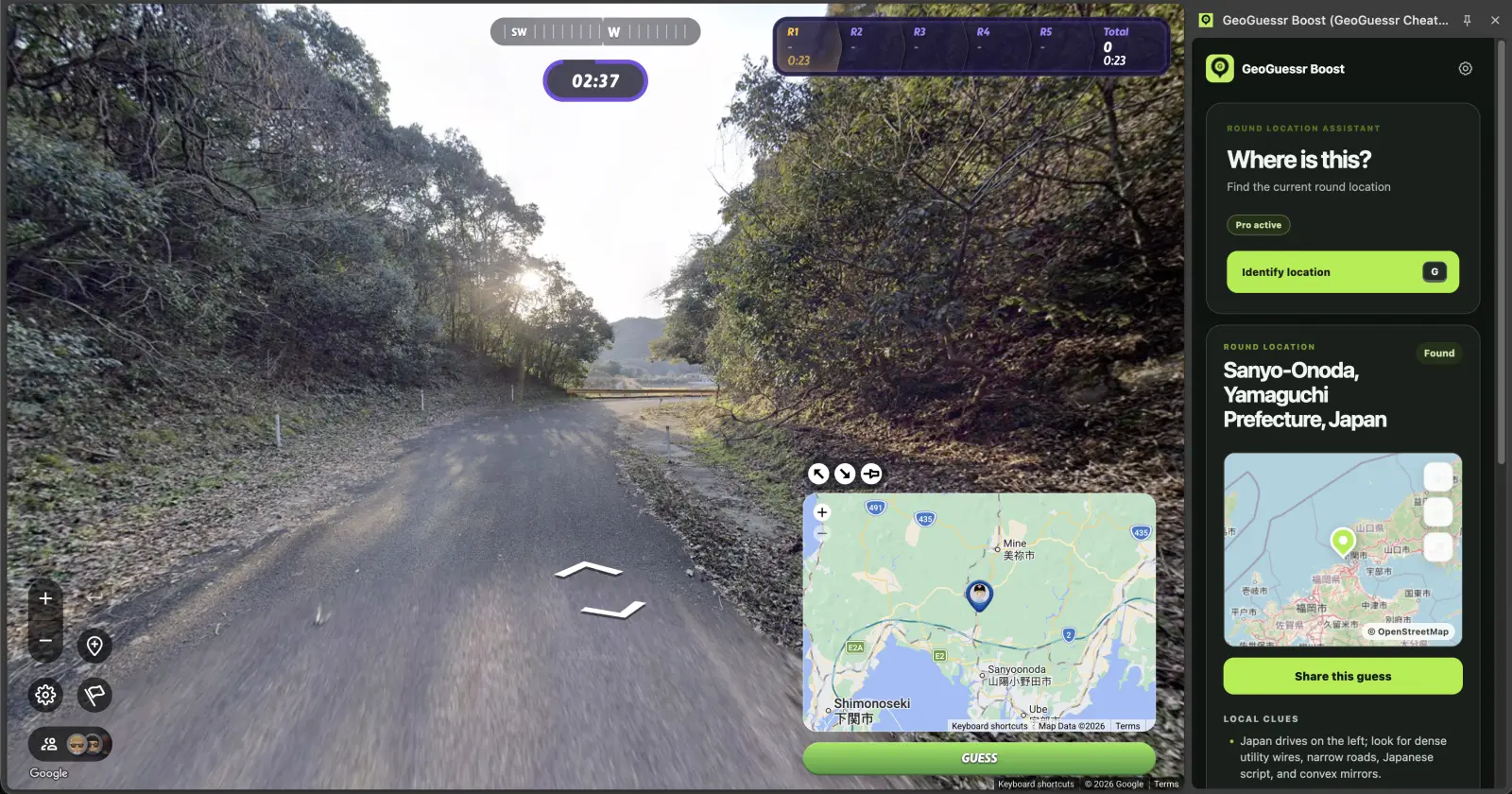
Best GeoGuessr tools is a high-intent search: the player wants a faster path from a confusing round to a useful map decision. This guide explains the practical use case, what to verify manually, where GeoBoost helps, and where helper tools should stay out of the game.
Built for supported private games, practice, testing, party rounds, and personal entertainment.
Independent product, not affiliated with GeoGuessr.
Supported round. Exact.Map point foundCoordinates
Updated
Tested with
GeoBoost 1.0.9
Intended use
Private, practice, and testing rounds
Known limits
Supported modes only; never ranked or competitive play
Choose the tool by the job
Tool type
Job it performs
Best context
Main limitation
Clue guide or notes
Build pattern recognition
Deliberate practice and review
Does not resolve the current round
Coverage map
Study countries and regional imagery
Preparation outside a live round
Adds tab switching during play
AI image analysis
Explain visible clues and suggest candidates
A second opinion from the scene
Can be confidently wrong
GeoBoost browser helper
Return a supported point, preview and placement controls
Private, practice and testing rounds
Works only on supported pages and allowed contexts
01
Best use cases
Use this workflow when the goal is speed, feedback, or an agreed private-game reveal, not when other players expect strict manual guessing.
Best GeoGuessr tools should answer a concrete player job, not act like a generic promise. The page is built around supported rounds, private rules, and a faster feedback loop.
private groups
solo practice
players improving speed and placement
02
A practical workflow
A good helper workflow still has order. The round should move from a quick visual read to a supported check, then to placement or review.
Use clue guides for learning patterns.
Use maps for manual region study.
Use GeoBoost for supported reveal and placement workflows.
Review mistakes immediately.
03
Manual clues to check
Even with a helper, the most useful players keep a short clue checklist. It makes the result easier to trust and turns a reveal into practice.
what job each tool performs
whether the stack slows you down
privacy and permissions
where the Aha Moment happens
04
Where GeoBoost fits
GeoBoost belongs in the stack when the missing job is fast supported result, map preview, exact point, or automated placement.
05
Limits and fair-use context
More tools can mean more distraction. Keep only the ones that make a round faster or make learning clearer.
06
Keep the stack smaller than the problem
Every extra tab adds attention cost. A beginner usually needs one clue reference, one place to review maps and one feedback mechanism. Add another tool only when it removes a specific failure, such as slow reveals, poor regional study or missing explanations.
Evaluate a tool with a short test: name the job, time the first useful result, inspect permissions and decide what you would remove from the current workflow if the tool stays. If nothing disappears, the stack probably became more complicated rather than more valuable.
 GeoBoost